smart #5 Range and Charging in Egypt: Home, Fast Charging and Road Trips
The #5 has strong published charging specifications, but everyday Egyptian ownership is defined by the power you can actually access, battery temperature and route planning. Here is how to assess it correctly.
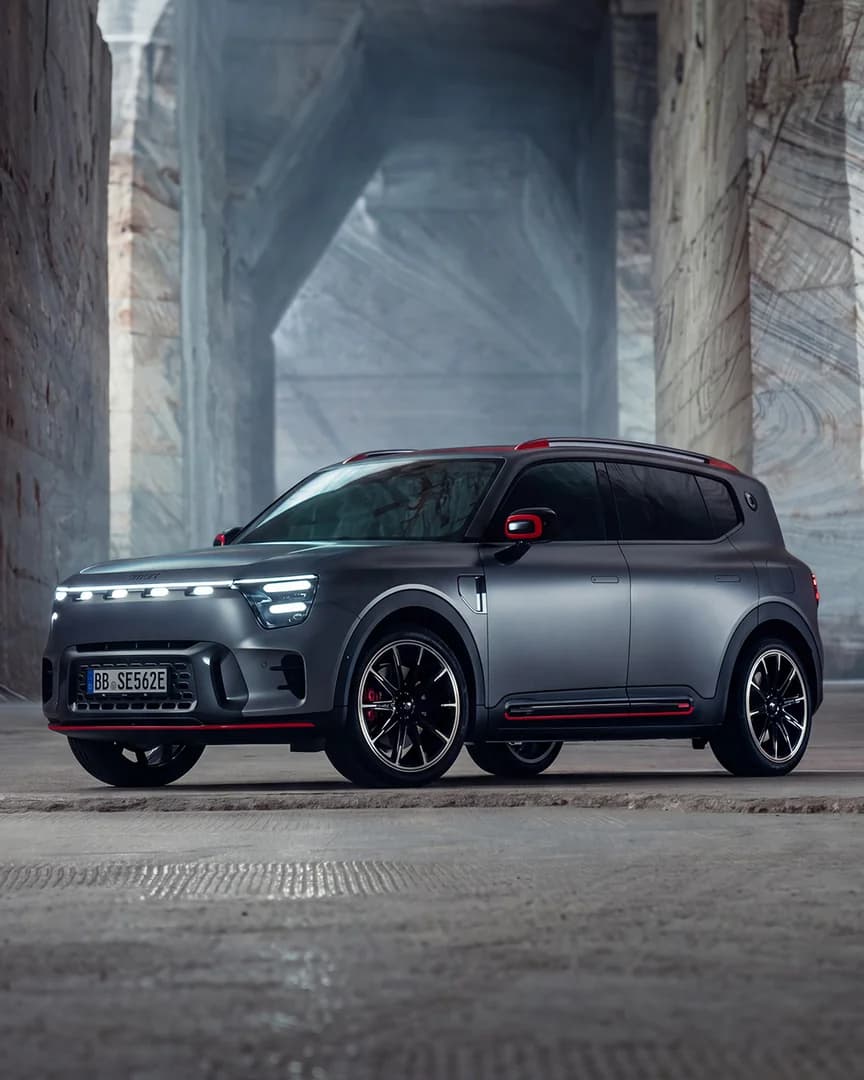
smart R&D winter-test photograph supplied for this guide. It shows a test prototype, not typical Egyptian weather or a showroom car.
At a glance
A 590 km WLTP badge and an 18-minute charge headline are useful reference points, not a guarantee of your Cairo commute or a public charging session. Your actual home supply and routine journeys are more important than a single laboratory number.
The UK smart #5 Pro+ and Premium are rated 590 km WLTP; the BRABUS version is rated 540 km WLTP.
The large-battery versions list up to 22 kW AC capability and 10-80% around 18 minutes on a suitable 400 kW DC charger in optimal conditions.
Public DC charging may be much slower if the site offers less power or the battery is cold, hot or at a high state of charge.
Estimate home cost from kWh added multiplied by your actual effective EGP/kWh tariff, accounting for charging losses.
Plan real intercity routes by confirmed chargers and backup options, not just by theoretical WLTP distance.
How far can the smart #5 travel on one charge?
The manufacturer's UK homologation shows a maximum combined WLTP range of 590 km for smart #5 Pro+ and Premium and 540 km for BRABUS. The performance variant uses energy differently from the RWD versions, which explains why the family maximum should never be printed next to every trim indiscriminately.
WLTP is a standardized procedure to make vehicle comparisons consistent; it is not a promise. The practical distance to plan for an Egyptian journey depends on air-conditioning, tyre pressure, passenger load, luggage, speed, gradient, wind and how much battery reserve you want to keep on arrival.
For the first few weeks, record your real kWh/100 km on your routes. That consumption figure gives you a more personal planning baseline than selecting a percentage of the advertised maximum at random. Remember that a planned arrival reserve is particularly important when your destination has uncertain public charging.
| Official UK configuration | Combined WLTP range | WLTP consumption |
|---|---|---|
| Pro+ | 590 km | 18.4 kWh / 100 km |
| Premium | 590 km | 18.4 kWh / 100 km |
| BRABUS | 540 km | 19.9 kWh / 100 km |
Home AC charging: your most predictable daily routine
The relevant 100 kWh UK versions support AC charging up to 22 kW when a compatible supply and charging point are available. That vehicle capability is not the same as the power available in your apartment building. Your actual charging rate is limited by your electrical installation, charger, supply phases and settings.
If you have a dedicated parking space, arrange for a qualified electrician to assess supply capacity, safe cable routing, earthing and an appropriately protected circuit before buying a wallbox. Do not run a long, improvised extension cord through a shared garage.
If you already charge overnight, consider what you need daily rather than trying to fill the pack from near empty each night. For many driving routines, recovering the previous day's consumption is all the charging you need.
- Confirm that the building permits charging installation
- Check single-phase versus three-phase power with an electrician
- Confirm the car's supplied cable and connector for the local unit
- Account for charging losses in electricity-cost calculations
Public DC charging: when 18 minutes is realistic and when it isn't
smart's published 10-80% time of about 18 minutes assumes favourable conditions and access to the necessary high-power DC charging equipment. It is a test-condition reference for the relevant large-battery models, not a baseline for an ordinary slower station.
The practical session depends on charger output, the vehicle's state of charge when plugged in, thermal preconditioning, occupied stalls and the station's actual performance. Power commonly reduces as the battery approaches full, so a 10-80% session is a different calculation from 80-100%.
Before relying on a public station in Egypt, confirm the exact location, operating status, suitable connector, payment requirements, parking access and a backup charger. A route with one unverified fast charger is not a resilient road-trip plan.

How much will charging cost in EGP? Calculate it from your own tariff
Avoid copying one fixed Egyptian home electricity price into an article that buyers may read months later. Home charging costs depend on the applicable residential tariff and consumption band; public providers can use different session or energy pricing. Check the current tariff and invoices before multiplying.
For energy used while driving, start with the car's displayed consumption. If your average is 20 kWh/100 km and you travel 250 km, the driving energy is about 50 kWh. The electricity drawn from the wall will be somewhat higher because charging is not perfectly lossless. Multiply that measured wall energy by your effective EGP per kWh to estimate the cost.
For a fair comparison with a combustion SUV, use your actual annual distance, measured consumption, current electricity prices, charger fees and maintenance needs. Don't promise dramatic savings from one selected example that doesn't match the buyer's routine.
| Input to check | Where to get it | Why it matters |
|---|---|---|
| Distance driven | Trip log or dashboard | Determines energy demand |
| Actual kWh/100 km | Car's trip display | Captures local speed, AC and traffic effects |
| kWh bought | Charger statement or meter | Includes charging loss |
| EGP per kWh | Current utility bill or charger | Sets today's monetary cost |
What Scandinavian winter testing really proves
The supplied smart R&D material describes over 3,000 km of winter validation from Sweden through Norway and Finland, including temperatures as low as -26 C. The team's focus included slippery-road handling, heating, defogging and battery preconditioning before DC charging.
Those observations support the point that temperature control and battery management are essential engineering systems. But a winter prototype test cannot establish the exact cooling performance, hot-weather highway range or charging time of a specific Egyptian delivered car. Those are separate local checks.
The useful owner lesson is to use any supported battery preconditioning features as directed, monitor thermal warnings and avoid relying on one theoretical charger time. This is a more grounded takeaway than saying the car has been proven in every climate.

A practical Egypt trip-planning checklist
For a Cairo-to-coast or other long-distance route, first plot your intended stop locations and verify chargers with their actual operators. Plan arrival reserve, consider your return trip and choose a backup station if the primary stop is busy or not functioning. Weather, holiday traffic and route detours are reasons to be flexible, not reasons to panic.
Before a long trip, check tyre pressures and luggage load, review your software's charge-stop guidance and avoid basing your charging plan on the absolute edge of the WLTP number. If you share driving, make sure the second driver knows how to authenticate at the charger and where the charge cable is stored.
Ask SPARKD-EV to demonstrate the exact vehicle's charge port, AC equipment, navigation and any battery preconditioning controls. Once that routine is clear, return to the live model page to confirm the version that suits you.
- Verify charger with provider directly
- Keep an alternative stop
- Plan usable battery reserve
- Check cable/charging-card requirements
- Test the charging workflow before a long trip
Ready for the actual vehicle?
See the smart #5 available in Egypt, not just in a brochure.
The live SPARKD-EV model page owns local prices, trim listings and availability enquiries. Contact the showroom to verify the exact car before you commit.
Questions buyers ask
Does the smart #5 really charge from 10% to 80% in 18 minutes?+
The manufacturer quotes about 18 minutes for the relevant 100 kWh versions under optimal high-power DC charging conditions. Actual times at local stations can be longer.
Can I charge the smart #5 at home in Egypt?+
Home charging may be possible with a properly installed compatible AC charging point and sufficient electrical supply. A qualified electrician should assess the site and the local vehicle equipment.
What is the smart #5 BRABUS range?+
The official UK specification lists 540 km WLTP for BRABUS, compared with 590 km for Pro+ and Premium. Real-world range varies.
What is the exact smart #5 charging cost in Egypt?+
There is no universal cost. Multiply measured kWh drawn from the charger by the currently applicable EGP/kWh rate, including any provider or session fees.

About the author
SPARKD-EV Editorial Team
The SPARKD-EV Editorial Team prepares practical EV buying guidance for Egypt using the current vehicle catalog, cited model references and real showroom context. The goal is to help buyers compare options clearly and move confidently from research to a shortlist.
Real customer feedback
What SPARKD-EV customers say on Google
Selected public Google reviews shared for this update. The live Google listing can contain additional positive and critical feedback, so use the full listing when you want the complete review history.
“Very decent…know how to treat people respectfully”
Ahmed Barakat
Google review
“One of the best places to buy an electric car, excellent customer Service”
hossam ashraf
Google review
“The best in ev. Highly recommended”
Islam Idrees
Google review
“Great showroom”
Mo2men Karam
Google review
“A wonderful place”
Shaban Geme
Google review

SPARKD-EV showroom in New Cairo — real showroom photography already used across the SPARKD-EV website.
Physical showroom
Visit SPARKD-EV in New Cairo
See current vehicles in person, discuss availability and financing, and ask the team which model best fits your budget and charging routine.
Business Park, Building B3-A-2, Mivida, New Cairo, Egypt
Verified reference points
Official technical sources
Global specifications and testing refer to the cited variants and regions. Local pricing and supplied stock are handled on the SPARKD-EV model page.
Smart #5 research collection